
Bali is famous for its beaches, but some of the island’s most fascinating scenery lies beneath the water. Colorful coral reefs, tropical fish, sea turtles, manta rays, and even historic shipwrecks make the island an exciting destination for underwater adventures. However, snorkeling vs scuba diving in Bali offers two quite different ways to discover this marine life. Understanding what each activity involves can help you choose the right experience for your holiday.
Also Read: Is Bali Known for Snorkeling?
What to Know About Snorkeling vs Scuba Diving in Bali
Although both activities let you explore underwater environments, they differ in how you move through the water, what equipment you need, and how much preparation is involved.
1. How You Explore Underwater
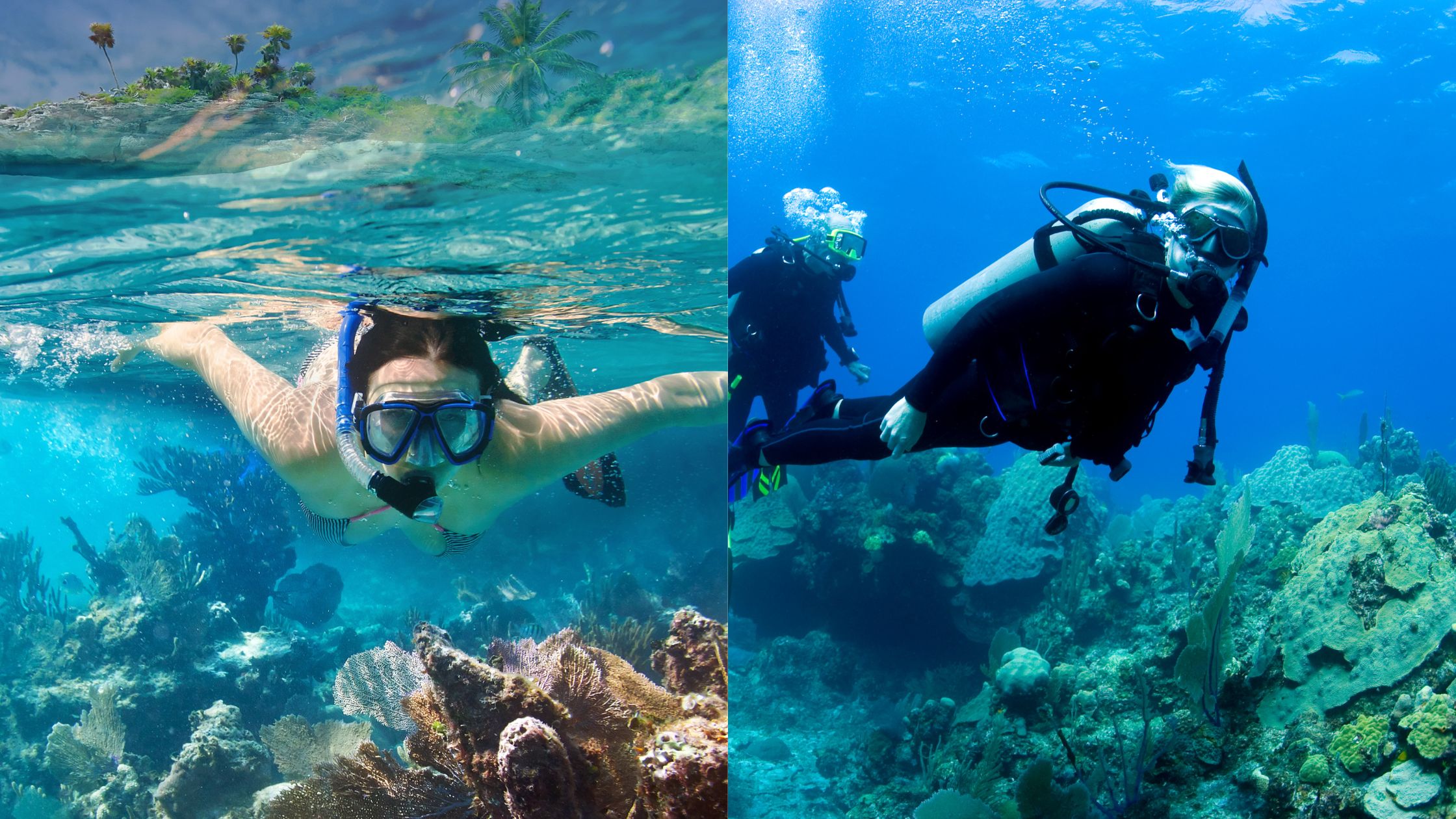
The main difference is where you spend most of your time in the water. Snorkeling allows you to float on the surface while looking down through a diving mask. A snorkel lets you breathe while keeping your face underwater, so you can observe coral reefs and fish without constantly lifting your head. You can also briefly swim underwater by holding your breath, provided conditions and your abilities allow it.
Scuba diving takes you below the surface using a breathing system connected to an air cylinder. Divers can explore deeper sections of reefs, underwater slopes, and shipwrecks while breathing underwater.
2. Equipment Required
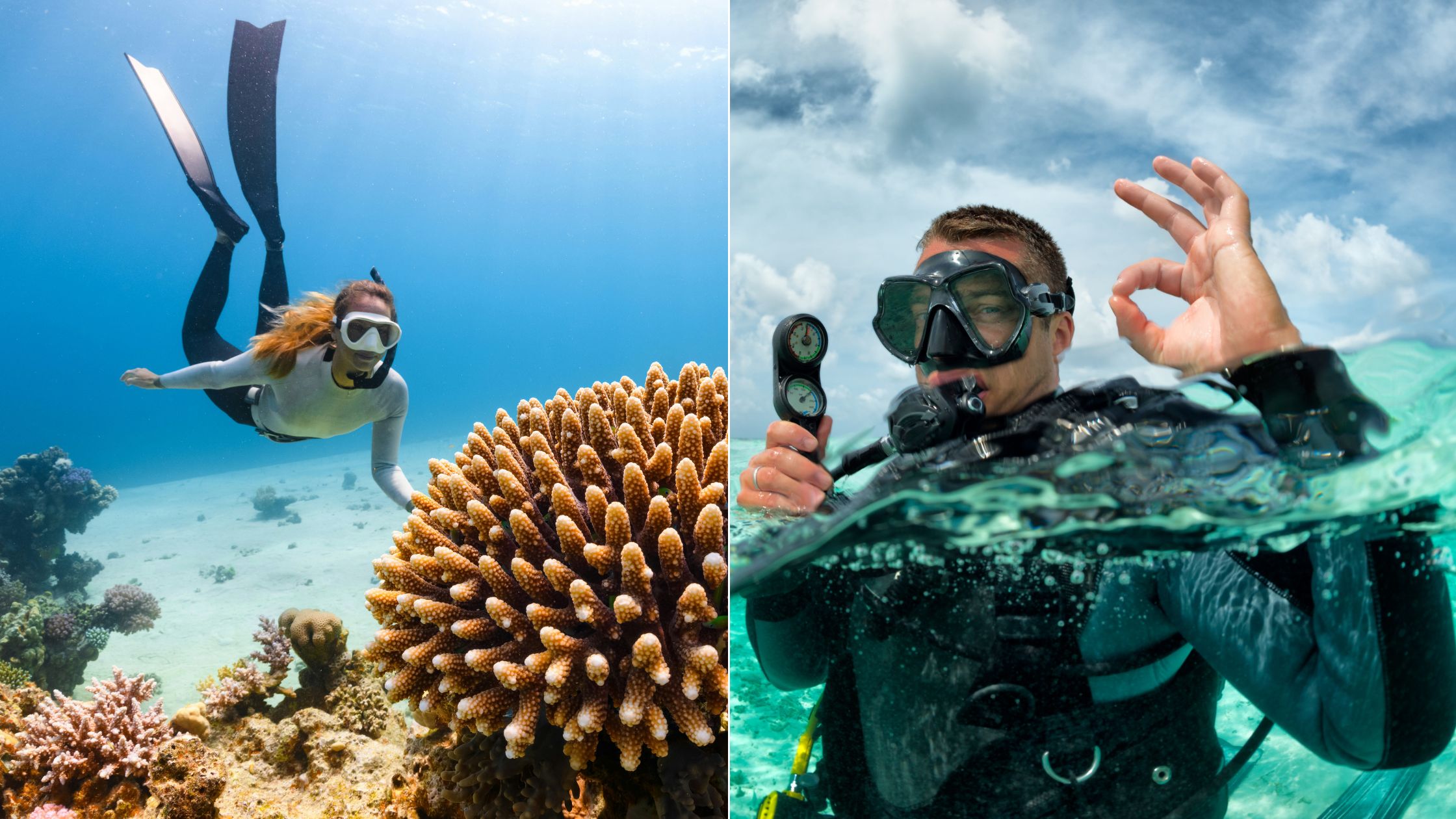
Snorkeling uses relatively simple equipment, which makes it convenient for holidaymakers who want to enjoy the ocean without extensive preparation. The basic equipment includes:
- Mask: Provides a clear underwater view.
- Snorkel: Allows breathing while floating face-down.
- Fins: Make you move through the water with less effort.
- Life jacket: Provides additional flotation support when needed.
Scuba diving requires more specialised equipment, including a mask, fins, regulator, air cylinder, buoyancy control device (BCD), and instruments for monitoring depth and air supply. Divers also need suitable exposure protection, depending on the water temperature.
Also Read: What to Wear for Snorkeling?
3. Skills and Safety Requirements
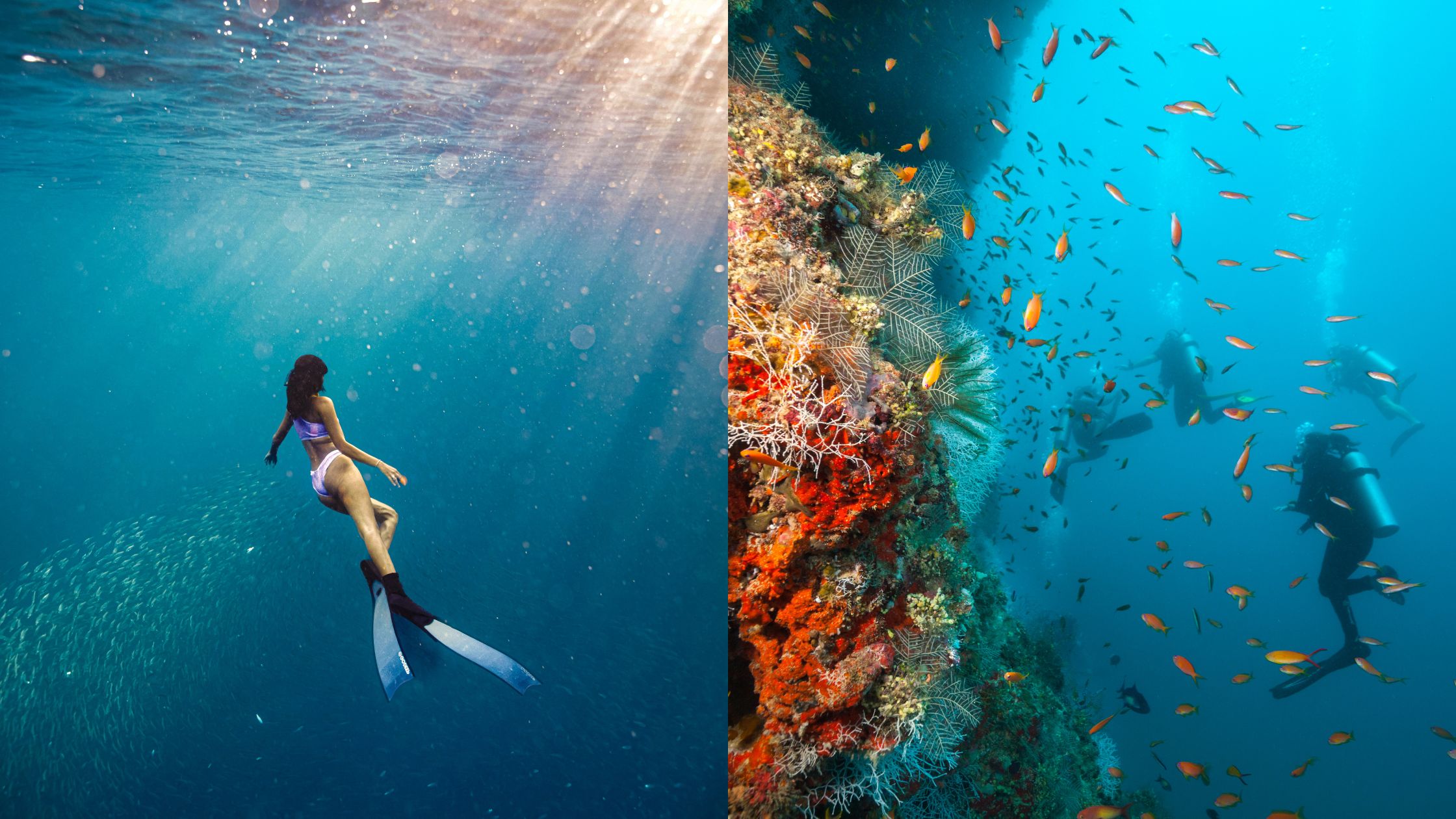
Snorkeling is generally easier for beginners because it does not require scuba certification. However, being comfortable in the water is important. Beginners should follow their guide’s instructions, stay within designated areas, and use flotation equipment when necessary.
Scuba diving involves more training and preparation. Certified divers must follow the depth and experience limits of their qualifications. However, beginners can also experience an introductory scuba dive under professional supervision without completing a full certification course. The available options depend on the operator in Bali and local conditions.
Also Read: How To Stay Safe while Snorkeling
4. Depth and Marine Life Encounters
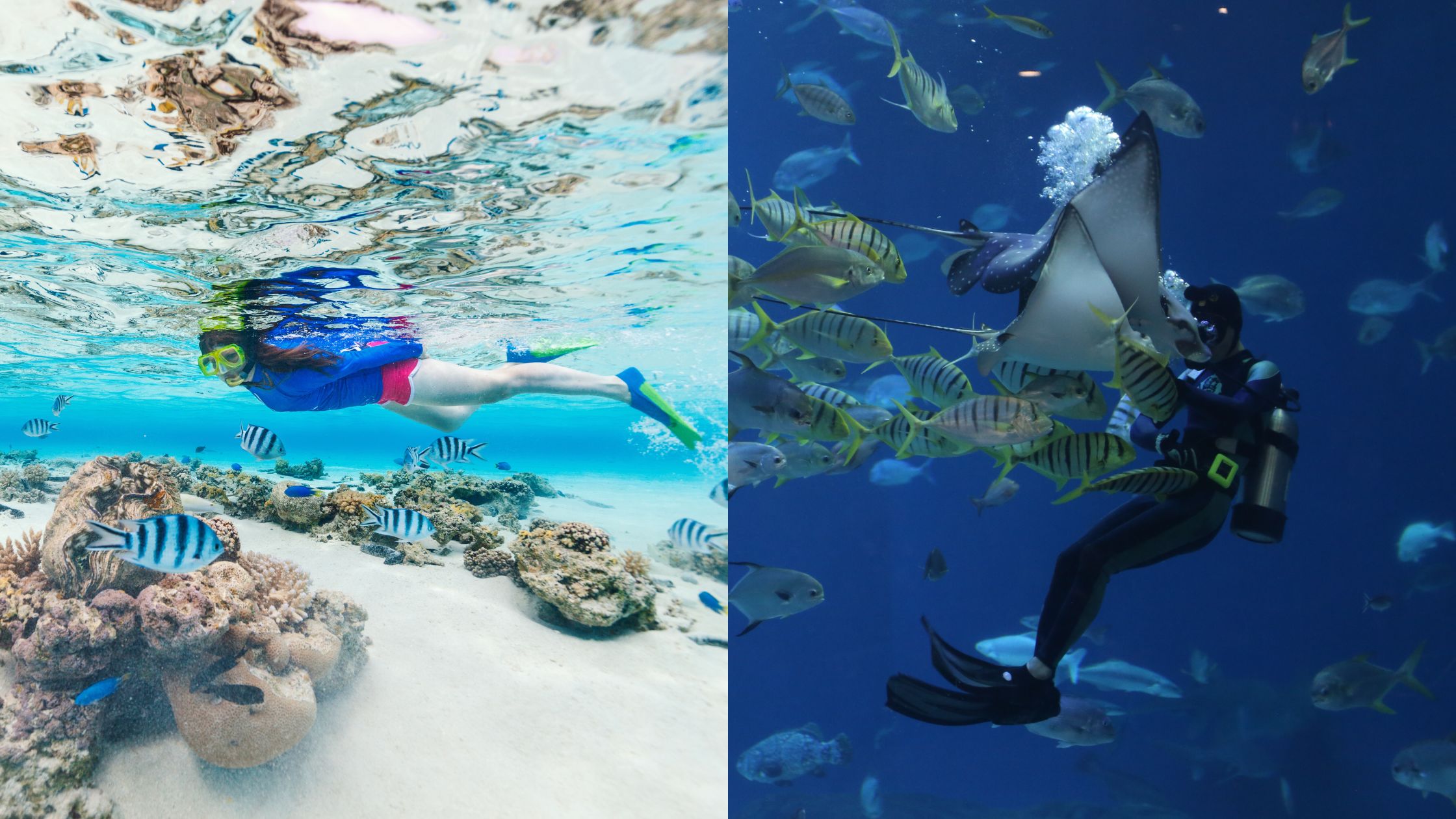
Snorkeling is particularly enjoyable in shallow, clear water where sunlight reaches coral gardens and tropical fish. You can observe marine life from above without needing to descend far beneath the surface.
Scuba diving offers access to underwater environments that are difficult or impossible to explore while snorkeling. These include deeper reef formations, underwater walls, and historic wrecks. Depending on the location, divers may encounter larger marine animals and different species living at various depths.
Neither activity guarantees particular wildlife encounters, as marine life sightings depend on natural conditions.
Also Read: What Would You See while Snorkeling in Bali?
5. Time Commitment and Physical Effort
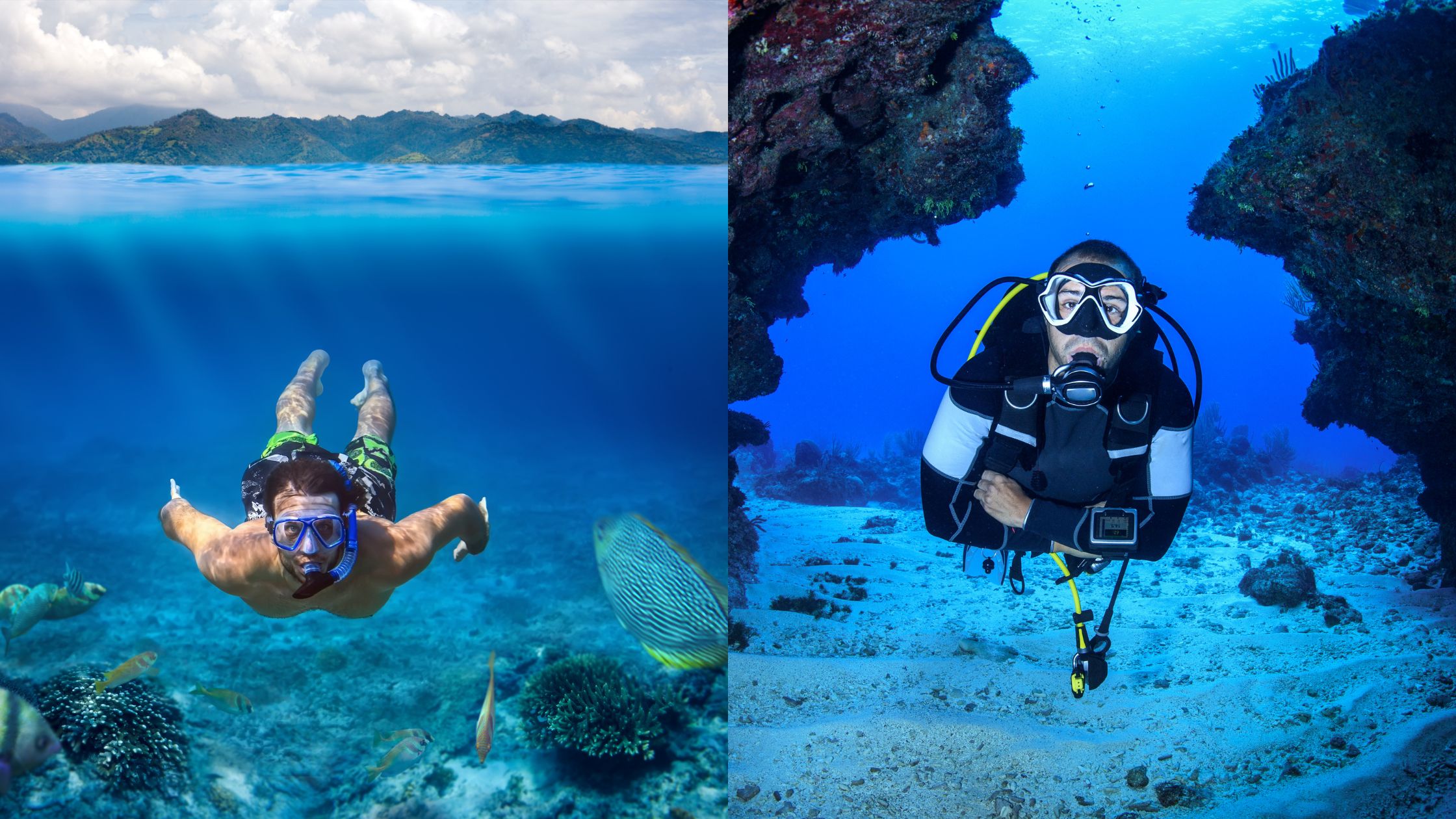
A snorkeling session can be relatively flexible. You can spend time floating, take breaks between sessions, and enjoy the surrounding scenery. Nevertheless, swimming against currents or staying in the water for extended periods can still be physically demanding.
Scuba diving usually involves a more structured schedule. Participants need time for safety briefings, equipment preparation, buddy checks, and the dive itself. Underwater duration depends on depth, air consumption, and the dive plan. Divers must also follow appropriate surface intervals and post-dive safety recommendations.
Also Read: Is it True that Snorkeling Can Cause Vertigo?
Where Are the Best Places for Snorkeling and Scuba Diving in Bali?
The best locations depend on the marine scenery you want to experience and the conditions you are comfortable with. Several destinations around the island offer opportunities for both activities.
| Location | Underwater Highlights | Best Experience |
| Blue Lagoon, Padang Bai | Shallow coral gardens, tropical fish, and reef life | Snorkeling and introductory diving |
| Amed | Coral reefs, volcanic coastal scenery, and underwater structures | Snorkeling and shore diving |
| Tulamben | USAT Liberty, a historic World War II shipwreck surrounded by marine life | Scuba diving and surface viewing |
| Nusa Penida | Manta rays, coral formations, and deeper underwater landscapes | Guided snorkeling and scuba diving |
| Menjangan Island | Colourful coral reefs and impressive underwater walls | Snorkeling and scuba diving |
Blue Lagoon in Padang Bai is a convenient option for visitors looking for a coastal snorkeling experience. Its sheltered bay and accessible reef areas make it an appealing choice when sea conditions are suitable.
Amed offers a different atmosphere, with several coastal villages featuring coral gardens and accessible shore-entry locations. Meanwhile, Tulamben is particularly famous for the USAT Liberty shipwreck. Although scuba divers can explore the wreck more closely, its shallowest sections may also be visible from the surface.
Nusa Penida attracts visitors interested in manta rays, particularly around Manta Point. However, currents can be strong and conditions change, so guided trips and careful site selection are important. For another option, Menjangan Island in northwest Bali is known for its coral walls and diverse reef environments, accessible by boat.
Also Read: Age Limit for Snorkeling
Is Bali More Famous for Snorkeling or Scuba Diving?
Bali has an established reputation for both activities, although each attracts a different type of traveller.
Scuba diving has a particularly strong presence in Bali’s international tourism scene because of its distinctive underwater attractions. The USAT Liberty wreck in Tulamben, manta ray encounters around Nusa Penida, and the coral walls of Menjangan Island are among the reasons divers travel to the island.
Snorkeling, on the other hand, is an accessible option for a wider range of holidaymakers. Visitors do not need scuba certification, and many coastal destinations offer opportunities to observe marine life without specialised diving equipment.
Therefore, it would be inaccurate to claim that one activity is definitively more popular without comparable visitor statistics. When considering snorkeling vs scuba diving in Bali, the better choice depends on your interests, swimming ability, available time, and preferred level of adventure.
Combine Your Bali Snorkeling Trip with an ATV Adventure
Exploring Bali’s underwater scenery is already an exciting experience, but you can make your holiday even more memorable by combining snorkeling with an ATV ride. Ubud Quad Biking offers packages that bring these two activities together, allowing you to enjoy colourful marine life before heading out on an off-road adventure through Bali’s scenic trails.
Your ATV experience is guided by professional instructors with years of experience and supported by top-tier equipment. Children, adults, and older participants can enjoy suitable rides as long as they meet the applicable age, health, and safety requirements. International travellers can also pay in currencies other than Indonesian rupiah, making the booking process more convenient.
Planning your activities is also flexible, as cancellations made more than 24 hours before the scheduled activity are eligible for a full refund, subject to booking terms. Contact Ubud Quad Biking to explore the available snorkeling and ATV packages and add two exciting outdoor experiences to your Bali holiday.